What Does a Conversion Rate Optimization Consultant Actually Do?
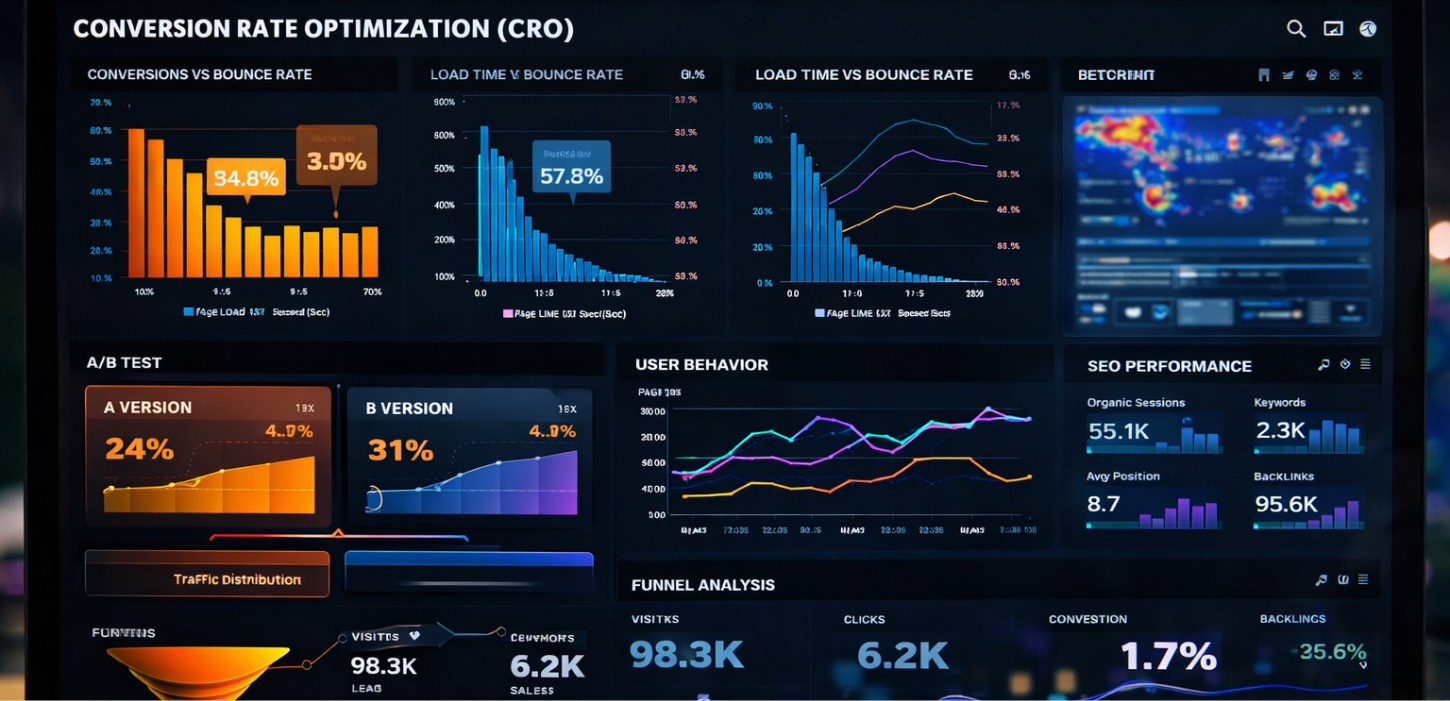
A conversion rate optimization consultant analyzes your website and marketing funnel to identify the specific reasons visitors leave without converting. This is not guesswork it is a data-driven process that combines quantitative analysis (traffic data, heatmaps, funnel drop-off reports) with qualitative insight (user session recordings, customer surveys, usability testing).
From that analysis, the consultant forms hypotheses about what is causing friction in the conversion path a confusing headline, a form that is too long, a page that loads too slowly on mobile, trust signals missing at a critical decision point and then designs and tests changes to verify which fixes produce measurable improvement.
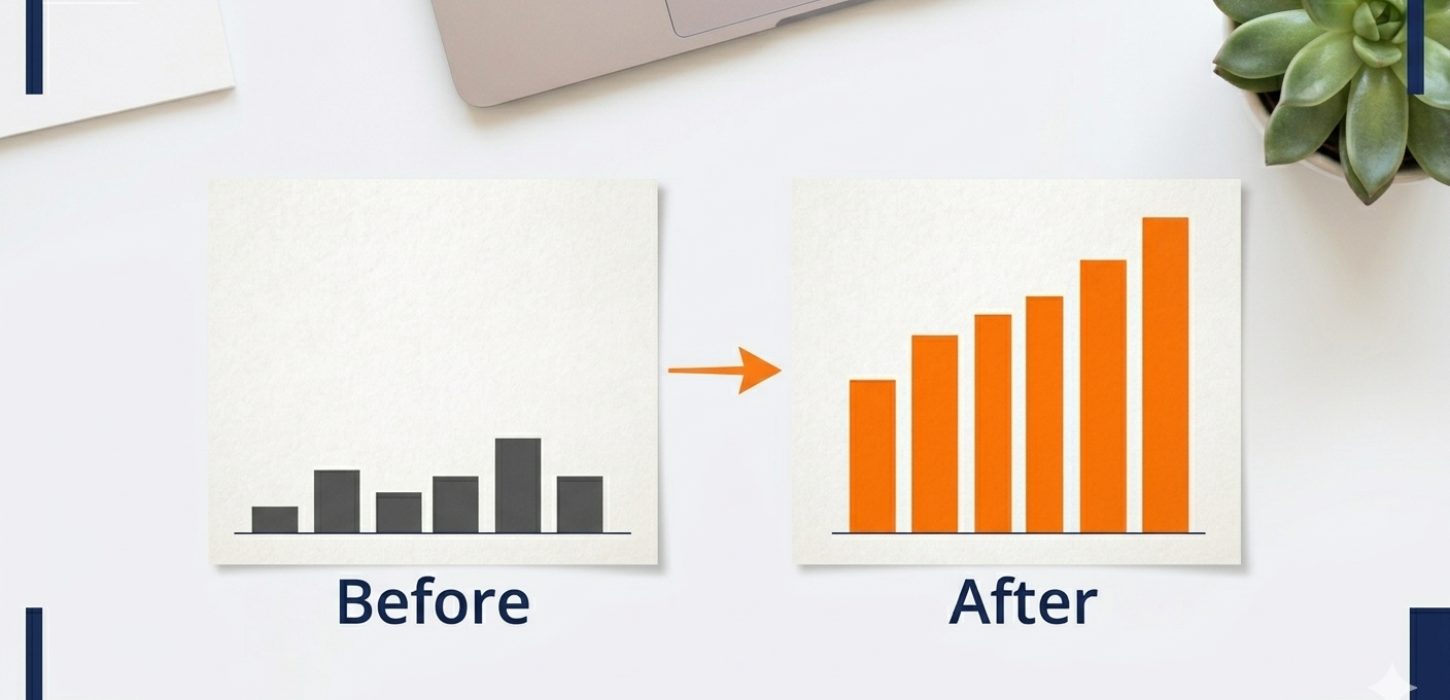
The work is iterative. No single change transforms a business. A good CRO consultant works through a systematic backlog of tests, with each successful test compounding the gains of the previous ones. Over a six to twelve month engagement, businesses can see their conversion rates double or more not from a single insight, but from a disciplined process of continuous improvement.
If you’re ready to scale, check out our digital marketing services built for small business growth.
Signs Your Business Needs a Conversion Rate Optimization Consultant
Not every business needs a dedicated CRO consultant. Here are the specific conditions that make the investment most clearly justified.
You Have Traffic but Low Lead Volume
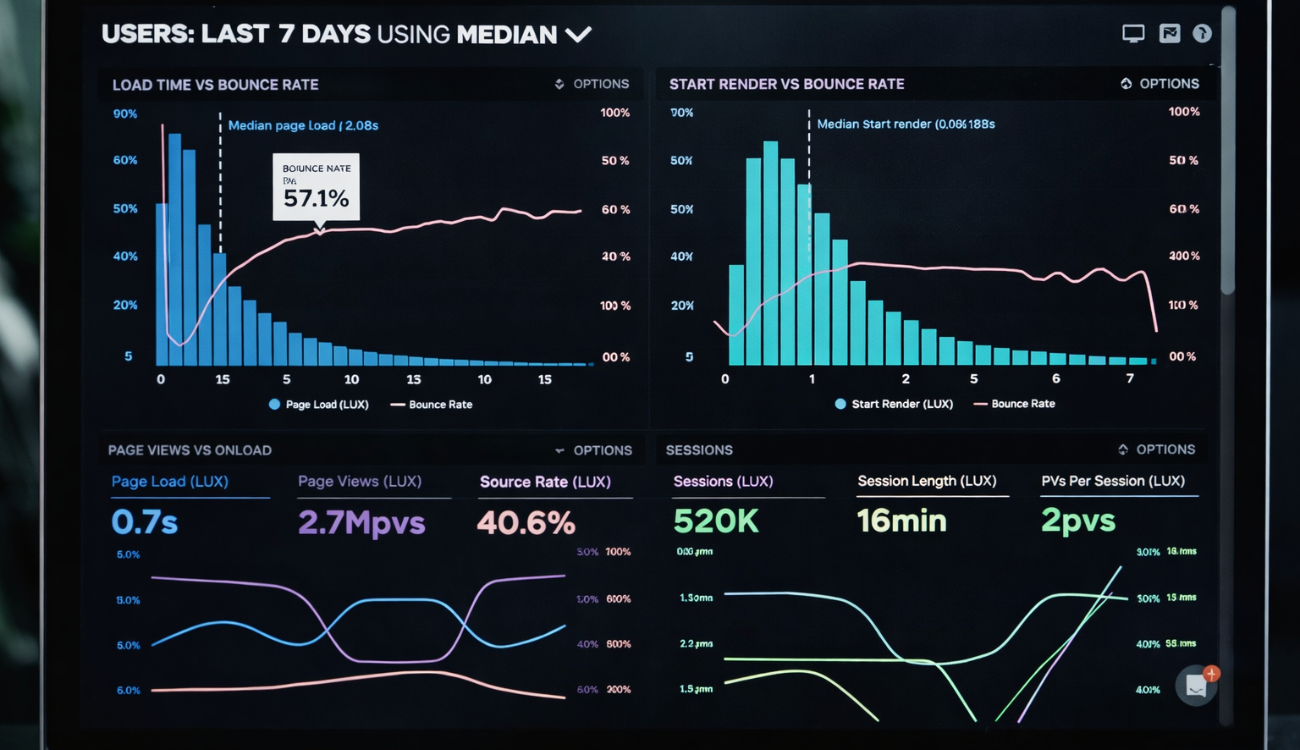
If your analytics show consistent, meaningful traffic to your website but your phone rarely rings and your contact form submissions are sparse, the problem is almost certainly on-page. You are attracting the right people you are just failing to convert them. A CRO consultant can pinpoint exactly where the drop-off occurs and why.
Your Cost Per Lead Is Rising
Increasing ad budgets without improving conversion rates is an expensive treadmill. If you are spending more each quarter to acquire the same number of leads, CRO is the more efficient lever. Doubling your conversion rate effectively halves your cost per lead from paid channels without changing your ad spend at all.
You Have Recently Launched or Redesigned Your Website
New websites are often built on aesthetic and branding priorities rather than conversion ones. A CRO consultant can assess what the new design is costing you in lead volume and identify the specific changes that would recover that performance.
You Are Scaling Paid Advertising
Before you increase a paid media budget significantly, optimizing your conversion rate first ensures that every incremental dollar of ad spend converts more efficiently. Scaling traffic into a poorly converting funnel accelerates losses. Scaling into a well-converting one accelerates returns.
Key principle: A conversion rate optimization consultant does not generate more traffic. They make the traffic you already have work significantly harder for your business.
What Results Should You Realistically Expect?
CRO is not magic, and any consultant who promises specific conversion rate uplifts before seeing your data is not being honest with you. That said, realistic expectations for businesses that engage a CRO consultant with sufficient traffic and a proper testing process look something like this.
In the first 30 to 60 days, the primary deliverable is insight rather than improvement. You should expect a thorough audit of your current funnel, identification of the highest-priority barriers to conversion, and a prioritized testing roadmap. Any quick wins simple fixes like unclear CTAs, broken forms, or obvious trust signal gaps may show results in this period.
From months two through six, you enter active testing. Individual tests may show modest results, but the cumulative impact of multiple winning tests compounds. Businesses with sufficient traffic often see 20 to 50 percent relative conversion rate improvement within six months of structured CRO work.
Beyond six months, optimization becomes a competitive advantage. Your funnel is measurably better than it was, and the continuous testing process keeps it improving while competitors operate on intuition alone.
See what makes us different by visiting our digital marketing agency story.
The CRO Process: What Good Looks Like
A rigorous CRO process follows a consistent structure regardless of the specific business or industry. Understanding what this looks like helps you evaluate whether a consultant you are considering is operating with genuine methodology or guessing.
The process begins with research: traffic analysis, heatmap and scroll data, session recordings, competitor benchmarking, and customer interviews or surveys when available. This research phase generates a list of hypotheses potential explanations for why your conversion rate is where it is.
Those hypotheses are then prioritized using a framework that considers the likely impact of each fix, the confidence level the data supports, and the ease of implementation. High-impact, high-confidence, easy-to-implement changes go first.
Each hypothesis becomes a test. Changes are made to a variation of the page, traffic is split between the original and the variation, and results are measured with statistical rigor to separate genuine improvements from random fluctuation. Winning variations are implemented. Losing tests inform future hypotheses. The cycle repeats.
How to Choose the Right CRO Consultant
The CRO industry has no formal licensing or certification standards, which means quality varies enormously. When evaluating a conversion rate optimization consultant, look for demonstrated process over claimed expertise. Can they walk you through a specific past engagement — the research phase, the tests they ran, the results they measured, and what they learned from tests that did not win?
Look for consultants who are honest about the role of traffic volume. CRO requires enough test traffic to reach statistical significance. A consultant who promises meaningful results for a site receiving two hundred visitors per month is either describing qualitative usability improvements or overpromising.
Also evaluate whether they work with a full-funnel mindset. CRO is not just about landing pages it spans every touchpoint from the ad to the post-conversion follow-up. Consultants who address only the website in isolation miss significant conversion levers in the advertising, email nurture, and sales handoff stages.
What Does CRO Typically Cost?
Pricing for CRO work ranges widely depending on scope, business size, and the consultant’s experience. Freelance CRO consultants typically range from $75 to $250 per hour for project work, or $2,000 to $8,000 per month for ongoing optimization retainers. Agency-level CRO engagements at larger scales can cost significantly more.
The more useful framing is return on investment rather than absolute cost. If your business currently generates 50 leads per month from a website receiving 5,000 visitors, and a CRO engagement improves your conversion rate from 1% to 2%, you now generate 100 leads per month from the same traffic. At any reasonable value-per-lead, the ROI math makes the investment obvious.
Not sure how it works? Check our frequently asked questions before getting started.
How Exposure Media Approaches Conversion Rate Optimization
At Exposure Media, CRO is not a standalone service disconnected from the broader marketing strategy it is baked into everything we build and manage. When we design landing pages, we build them with testability in mind. When we manage paid campaigns, we track conversion performance at the page level, not just the campaign level. When we identify underperforming assets, we bring data to the conversation rather than opinions.
For clients who want dedicated conversion optimization work, we offer structured audits and testing programs that fit within our broader growth strategy engagements. We do not promise specific conversion uplifts before seeing your data. We do promise a rigorous, honest process that prioritizes measurable improvement over impressive-sounding activities.
If your website is generating traffic that is not converting at the rate your business needs, the conversation with a conversion rate optimization consultant starts with understanding what your data is already telling you. We are ready to have that conversation.
Frequently Asked Questions
What is conversion rate optimization (CRO)?
Conversion rate optimization is the systematic process of increasing the percentage of website visitors who complete a desired action such as submitting a contact form, making a purchase, or booking a consultation. It combines data analysis, user behavior research, and structured testing to identify and remove barriers that prevent visitors from converting, without requiring additional traffic investment.
How is conversion rate calculated?
Conversion rate is calculated by dividing the number of conversions (desired actions completed) by the total number of visitors, then multiplying by 100 to express it as a percentage. For example, if 1,000 people visit a landing page and 30 submit a contact form, the conversion rate is 3%. Industry averages vary significantly service business landing pages typically range from 2 to 8 percent, while e-commerce checkout conversions are generally lower.
How much traffic do I need before CRO testing is worthwhile?
Meaningful A/B testing typically requires enough traffic to reach statistical significance generally at least 1,000 visitors per variation, per test. For lower-traffic sites, qualitative CRO work (user session analysis, heatmaps, usability testing, expert review) can still produce valuable improvements without relying on formal testing. The threshold at which formal testing becomes practical is roughly 2,000 to 5,000 monthly visitors to the pages being tested.
What is a good conversion rate for a website?
There is no universal benchmark because conversion rates vary enormously by industry, traffic source, and what action is being measured. For lead generation pages in service industries, a conversion rate of 3 to 8 percent is generally considered healthy. The most meaningful benchmark is your own historical rate consistent improvement over time matters more than hitting an industry average.
What is the difference between CRO and UX design?
User experience (UX) design focuses on how easy and enjoyable a website is to use the flow, navigation, information architecture, and interaction design. CRO focuses specifically on driving conversions, which sometimes aligns with good UX and sometimes requires tradeoffs. CRO is more data-driven and hypothesis-led, while UX design tends to be guided by design principles and user research. In practice, effective CRO work incorporates UX thinking, and the two disciplines are complementary rather than competing.
Want to Know Why Your Traffic Isn’t Converting?
Exposure Media can audit your funnel and tell you exactly what’s holding your conversion rate back.