
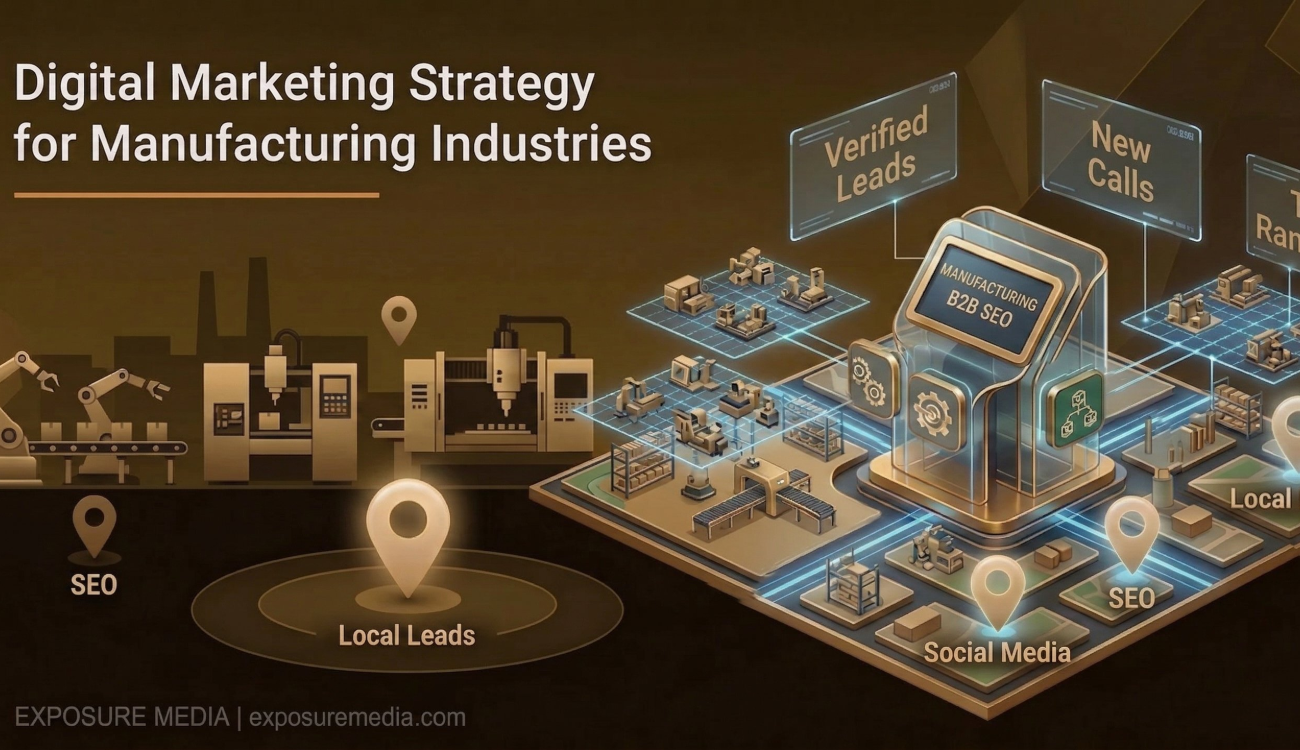
Digital marketing strategy for manufacturing industries helps manufacturers get found by buyers who are already researching vendors, comparing capabilities, and preparing RFQs. Industrial buyers do not usually make quick impulse decisions. They look for technical information, proof of capability, certifications, lead times, case studies, and a website that makes it easy to request a quote. This guide explains which channels matter most for manufacturers, how SEO and paid search support RFQ generation, and how Exposure Media builds digital marketing strategies for manufacturing companies that need measurable pipeline growth.
Quick Answer
Digital marketing strategy for manufacturing industries should focus on high-intent SEO, Google Ads for specific capabilities, RFQ-focused landing pages, LinkedIn visibility, case studies, technical content, local listings, and tracking that connects marketing channels to qualified inquiries.

The Manufacturing Buyer Journey
Digital marketing strategy for manufacturing industries starts with understanding how industrial buyers search. A procurement manager, engineer, or operations lead may search for a specific capability, material, certification, or location before contacting a supplier. They often compare several vendors before submitting an RFQ.
This means a manufacturer’s digital presence needs to answer practical questions. What capabilities do you offer? What materials do you work with? What industries do you serve? What certifications do you hold? What tolerance, volume, or lead time information can you provide?
Exposure Media helps B2B companies build digital marketing systems with SEO, Google Ads, web development, and tracking built around qualified lead generation.
Industrial SEO for Manufacturing Companies
Digital marketing strategy for manufacturing industries should include SEO because many industrial searches are specific and high-intent. Search volume may be lower than consumer keywords, but the value of one qualified RFQ can be much higher.
Manufacturing SEO should focus on capability pages, industry pages, material pages, application pages, and technical content. A generic “services” page is usually not enough. Buyers need to see details that match their project needs.
Google’s SEO starter guide is a useful official resource for understanding how clear content, page structure, and helpful information support search visibility.
Paid Search for RFQs
Digital marketing strategy for manufacturing industries can use Google Ads when manufacturers need qualified inquiries sooner than SEO alone can provide. Paid search works well when campaigns target specific capabilities instead of broad, generic manufacturing terms.
| Campaign Type | Best Use | Goal |
|---|---|---|
| Capability keywords | CNC machining, fabrication, molding, assembly | Capture high-intent buyers |
| Industry keywords | Aerospace, medical, automotive, industrial | Match specialized buyer needs |
| Location keywords | Regional supplier searches | Support local and regional sourcing |
| Retargeting | Past website visitors | Bring buyers back during research |
Exposure Media’s Google Ads service can support manufacturers that need campaigns tied to RFQs, calls, forms, and measurable pipeline actions.
LinkedIn and B2B Visibility
LinkedIn can be useful in digital marketing strategy for manufacturing industries because buyers, engineers, operations leaders, and procurement teams are active there. LinkedIn works best when content is educational, technical, and credible instead of overly promotional.
Manufacturers can use LinkedIn to share facility videos, process highlights, quality control content, case studies, certifications, hiring updates, and industry applications. Paid LinkedIn campaigns can also target specific job titles, industries, and company types.
LinkedIn is not usually the only channel, but it can support trust and awareness while search captures buyers who are ready to act.
Your Website as a Sales Tool
Digital marketing strategy for manufacturing industries depends heavily on the website. If the website looks outdated, loads slowly, lacks technical information, or hides the RFQ form, buyers may leave before contacting the company.
A strong manufacturing website should include clear capability pages, certifications, facility information, industry experience, case studies, project photos, and easy RFQ paths. It should also be mobile-friendly and built for tracking.
Exposure Media provides web development and web design to help companies create websites that support visibility, trust, and conversion.
Listings, Directories, and Local Visibility
Digital marketing strategy for manufacturing industries should not ignore local business listings and industry directories. Many buyers search for regional suppliers because they want shorter lead times, easier visits, or local supply chain support.
A complete Google Business Profile, consistent citations, and relevant directory profiles can support visibility. Reviews also matter because even B2B buyers look for trust signals before starting a conversation.
Exposure Media offers local business listing services to help companies improve consistency and visibility across important platforms.
How Exposure Media Builds Manufacturing Strategy
Exposure Media builds digital marketing strategy for manufacturing industries around the buyer, the sales cycle, and the value of qualified inquiries. The team identifies the strongest keywords, builds campaigns around RFQs, improves website conversion paths, and tracks performance clearly.
The strategy can include industrial SEO, Google Ads, LinkedIn content direction, local listings, landing pages, website improvements, and reporting that shows which channels create real opportunities.
To start building a manufacturing marketing plan, contact Exposure Media through the contact form.
Frequently Asked Questions
How is manufacturing digital marketing different from other B2B marketing?
Manufacturing marketing is more technical, often has longer sales cycles, and needs content that supports RFQs, certifications, capabilities, and buyer evaluation.
What channel should manufacturers invest in first?
Many manufacturers benefit from Google Ads for high-intent searches while building SEO pages for long-term organic visibility.
How can manufacturers get more RFQs online?
Manufacturers can improve RFQs by adding clearer capability pages, stronger RFQ forms, case studies, certifications, and targeted search campaigns.
Is LinkedIn useful for manufacturing companies?
Yes. LinkedIn can help manufacturers reach engineers, procurement teams, operations leaders, and industry decision makers.
How should ROI be measured for manufacturing marketing?
ROI should be measured through qualified RFQs, quoted opportunities, close rates, average job value, cost per RFQ, and revenue from each channel.
Conclusion
Digital marketing strategy for manufacturing industries works when it connects technical buyer intent with clear online visibility, strong capability content, RFQ-focused pages, and measurable campaigns. Manufacturers do not need generic marketing. They need a strategy built around how industrial buyers actually search and evaluate vendors.
Exposure Media helps manufacturing companies build smarter digital marketing systems using SEO, Google Ads, web development, local listings, and performance tracking. To start your strategy, visit the Exposure Media contact form or call (631) 387-4321.